
Have you ever opened a friend’s Snapchat profile, noticed a gold-ringed badge, and wondered what planet you are in their Best Friends list? The Snapchat+ Friend Solar System turns your Snapchat friendship ranking into a miniature solar system, with eight planets representing different positions. Understanding the feature helps you interpret the badge without confusing an app-based ranking with a real-life friendship.
The most important detail is that Snapchat’s official guidance describes the planets as positions in a friend’s Best Friends list. You can tap the relevant badge to see your position in that person’s Solar System, provided the feature is available and enabled. This guide explains how the feature works, how to check your planet, why rankings can change, and what the results actually tell you.
What Is the Snapchat Plus Best Friends List Planets Feature?
The Snapchat Plus best friends list planets feature is part of Snapchat+, the paid subscription service for Snapchat. Its official name is Friend Solar System.
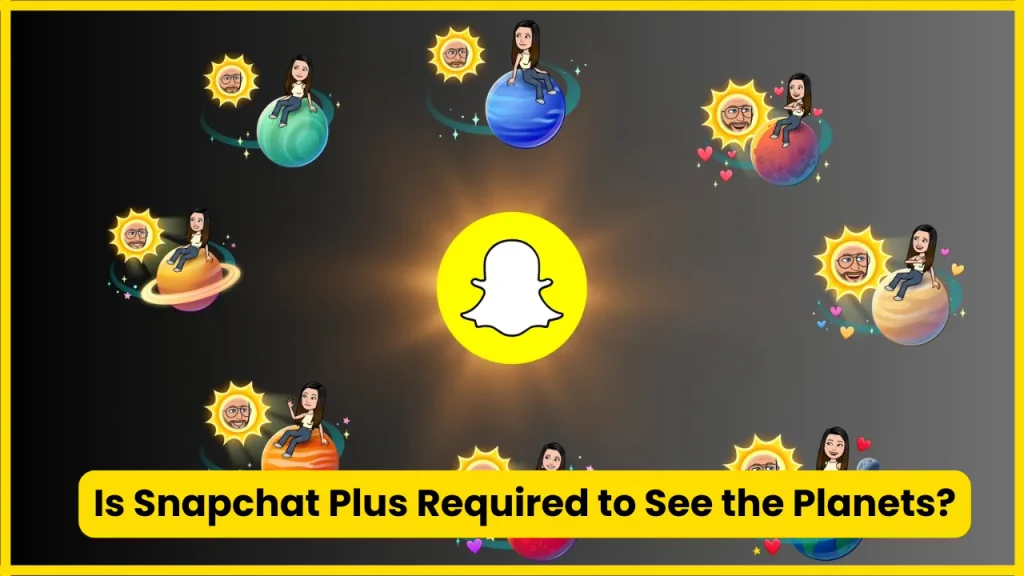
The feature uses a solar system as a visual representation of friendship positions. When you view the relevant Friendship Profile, you may see a gold-ringed Best Friends badge. Tapping it reveals which planet you represent in that person’s Solar System.
Here is the basic idea:
- The Sun represents the person whose Solar System you are viewing.
- The planets represent positions in that person’s Best Friends list.
- Mercury is the first position, while Neptune is the eighth.
- Your planet tells you your position in that particular person’s ranking, not necessarily your position in everyone’s list.
- The Solar System is optional and is turned off by default for first-time subscribers, according to Snapchat Support.
One distinction matters: seeing your planet in someone’s Solar System is different from viewing your own complete Best Friends list. The badge provides information about your position in the other person’s Solar System, not a public list of all their friends.
Also Read: Snapchat Premium Planets
Snapchat Planets in Order: All Eight Positions
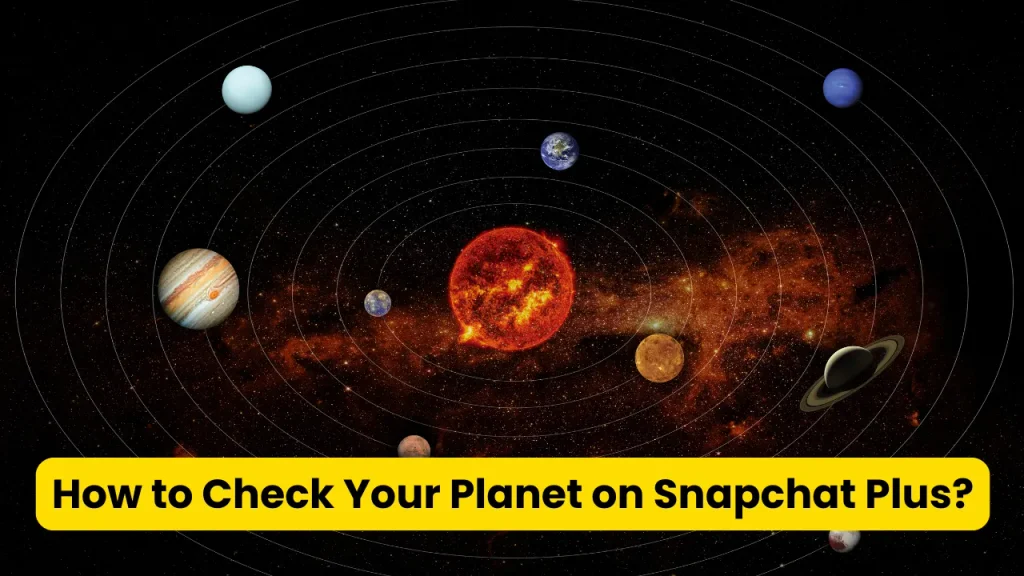
The planets follow the familiar order of the eight planets in our real solar system. In Snapchat’s Friend Solar System, the order corresponds to positions from first to eighth.
| Rank | Planet | What the position means |
| 1 | Mercury | First position in the Best Friends ranking |
| 2 | Venus | Second position |
| 3 | Earth | Third position |
| 4 | Mars | Fourth position |
| 5 | Jupiter | Fifth position |
| 6 | Saturn | Sixth position |
| 7 | Uranus | Seventh position |
| 8 | Neptune | Eighth position |
This is the core of the Snapchat planets in order system. The closer the planet is to the Sun in the displayed sequence, the higher the represented position.
Snapchat’s official guide identifies Mercury, Venus, Earth, Mars, Jupiter, Saturn, Uranus and Neptune as the eight planets used by the feature.
1. Mercury: First Best Friends Position
Mercury represents position number one. If your Friendmoji appears as Mercury in someone’s Solar System, you occupy the first position in that person’s displayed ranking.
This is the highest position represented by the feature. It indicates a prominent place in that person’s Snapchat Best Friends ranking, but it does not prove that you are their closest friend in every aspect of life.
2. Venus: Second Best Friends Position
Venus represents position number two.
If you appear as Venus, you occupy the second position in the relevant Solar System. You are among the highest-ranked friends represented by the feature, although the precise activity that determines each position is not publicly explained in a complete formula.
3. Earth: Third Best Friends Position
Earth represents position number three.
Seeing Earth means you occupy the third position in the other person’s Solar System. The planet’s visual design may include blue and green tones, but the most dependable way to identify your position is to check the planet name and its placement in the sequence rather than relying on colour alone.
4. Mars: Fourth Best Friends Position
Mars represents position number four.
If you appear as Mars, you hold the fourth position in that person’s ranking. Your position can change as your Snapchat interactions change, so a planet should not be treated as a permanent label.
5. Jupiter: Fifth Best Friends Position
Jupiter represents position number five.
This places you in the middle of the eight positions used by the Friend Solar System. It tells you where you appear in that ranking, not how much another person values you outside the app.
6. Saturn: Sixth Best Friends Position
Saturn represents position number six.
If you see Saturn, you occupy the sixth position in the relevant Solar System. This remains part of the eight-position ranking, even if it is farther from the Sun than Mercury, Venus, Earth, Mars and Jupiter.
7. Uranus: Seventh Best Friends Position
Uranus represents position number seven.
This is the second-to-last position in the displayed sequence. It does not necessarily mean that a friendship is weak or that the other person is deliberately ignoring you. The feature is an app-based representation of communication patterns.
8. Neptune: Eighth Best Friends Position
Neptune represents position number eight, the final position in the Friend Solar System.
If you appear as Neptune, you occupy the eighth position in that person’s ranking. It does not mean you are unimportant, unwanted, or the least valued person in their life. The feature shows a position within Snapchat’s system, not a complete assessment of a relationship.
Also Read: Planets in the Solar System Snapchat
How to Check Your Planet on Snapchat Plus?
Finding your planet takes only a few steps. The main requirement is access to Snapchat+ and the Friend Solar System feature.
Step 1: Open Snapchat
Launch the Snapchat app and open the profile of the friend whose Solar System you want to check.
Step 2: Open the Friendship Profile
Tap your friend’s Bitmoji or profile information to access the Friendship Profile. Look for the Best Friends badge with a gold ring.
Step 3: Tap the Best Friends Badge
If the badge and feature are available, tap the badge to see which planet you represent in that friend’s Solar System.
Step 4: Check the Feature Settings if Needed
If you cannot see the Solar System, open your Snapchat+ feature management settings and look for the Friend Solar System option. Turn it on if it is disabled.
These steps follow the process described in Snapchat’s official support documentation.
Important: The exact interface can vary by app version and account eligibility. If you do not see the badge, do not assume that you have been removed from someone’s Best Friends list.
Also Read: Snapchat Plus Planets Order
How Does the Snapchat Best Friends List Ranking Work?
Snapchat’s Best Friends feature reflects the people with whom you communicate most frequently over a rolling period. Snapchat has explained that the list helps users quickly find the people they interact with most often.
The Friend Solar System gives this relationship ranking a visual form. However, Snapchat does not publicly provide a complete scoring formula that allows users to calculate a planet from a specific number of Snaps or messages.
What Can Affect Your Position?
Your position can change as your interactions with friends change. Snapchat identifies Snaps and chats as the central activities used to describe its Best Friends feature.
The following points help explain the ranking without pretending to know Snapchat’s private algorithm:
- Snaps and chats: Communication frequency is central to the Best Friends feature.
- Changing interaction patterns: If you communicate more with one person than before, your relative position may change.
- Other friends’ activity: Your ranking is relative to the people in the relevant list, so changes involving other contacts may affect the overall order.
- Time: Snapchat describes Best Friends as reflecting communication over a rolling period, rather than a permanent lifetime ranking.
Do not rely on online claims that a fixed number of messages, a particular Snapstreak length, or a specific percentage guarantees Mercury or any other planet. Snapchat does not publish a formula supporting those calculations.
Does Snapchat Count Snapstreaks?
A Snapstreak records consecutive days of exchanging Snaps with another person. It is related to ongoing communication, but it is not the same thing as a Best Friends ranking.
Snapchat treats Streaks and Best Friends as separate features. Its official explanation describes Streaks as a record of consecutive days of Snap exchanges, while Best Friends reflects whom someone communicates with most frequently.
For that reason, a long Snapstreak alone should not be taken as proof that you are someone’s Mercury.
Also Read: Snapchat BSF Planets
Best Friends vs. Friends Badge: What Is the Difference?
The badge can help explain your position, but it is important to distinguish the relationship labels from the planet ranking.
| Feature | What it tells you |
| Best Friends badge | Snapchat identifies the relationship as belonging to the relevant Best Friends group |
| Friend Solar System | Shows your planet position in the other person’s Solar System |
| Your own Best Friends list | Reflects the people you interact with most frequently |
| Snapstreak | Tracks consecutive days of exchanging Snaps |
Snapchat’s official Friend Solar System guide specifically explains that the Best Friends badge appears with a gold ring and that tapping it reveals your planet position.
The key question is whose perspective you are looking at. Your ranking in another person’s Solar System and that person’s ranking in yours are not necessarily identical.
Are Snapchat Best Friends Rankings Always Mutual?
No. You should not assume that your position in someone else’s Solar System automatically tells you your position in your own.
For example, you might communicate frequently with a friend and place them near the top of your own Best Friends list. That person may communicate more frequently with other contacts, giving you a different position in their ranking.
This is why it is useful to distinguish your ranking of another person from their ranking of you. They describe different perspectives on activity within Snapchat.
Also Read: Solar Planets Snapchat
Why Does Your Snapchat Planet Change?
A planet change can be confusing, especially when you previously appeared as Mercury or Venus. The simplest explanation is that the ranking is not permanent.
Consider this example:
You regularly exchange Snaps and chats with one friend, and your position appears as Mercury. During the next few weeks, you communicate more with several other people. Your relative ranking may shift, and your planet may change.
That change does not automatically mean there has been a problem in your friendship.
Common Reasons Your Planet May Change
- You have started communicating more frequently with other friends.
- Your interactions with the person whose Solar System you are viewing have changed.
- The relative order of the people in the ranking has shifted.
- You are looking at a different person’s Friendship Profile.
- The feature has been disabled, or the badge is no longer available to view.
Snapchat does not publish a precise update schedule for planet positions in its official explanation. Avoid assuming that rankings update at a guaranteed hour or after a fixed number of messages.
What If Your Planet Disappears?
If your planet or badge is missing, check the feature’s availability before drawing conclusions about the relationship.
Try these steps:
- Confirm that you are viewing the correct Friendship Profile.
- Check whether the relevant Best Friends badge is visible.
- Review the Friend Solar System setting in Snapchat+.
- Update Snapchat if the app is outdated.
- Reopen the app and check again.
If the feature remains unavailable, consult Snapchat Support for account-specific guidance.
A missing planet by itself does not establish that someone has blocked you, removed you, or stopped considering you a friend.
Also Read: Snapchat BSFL Planets
Can You See Someone Else’s Entire Snapchat Best Friends List?
No. The Friend Solar System is not designed to display another person’s complete Best Friends list to you.
Snapchat’s official explanation says the feature shows your Bitmoji as a planet in the Solar System of the friend whose profile you are viewing. It does not display all of that person’s other friends.
This distinction matters because some online guides suggest that Snapchat Planets let you inspect every friendship in another person’s account. That is not what the official feature description says.
You can use the planet to understand your own position in the relevant Solar System, but you should not treat it as a way to uncover private conversations or identify every person someone communicates with.
Is Snapchat Plus Required to See the Planets?
Yes. The Friend Solar System is a Snapchat+ feature. Snapchat’s support documentation identifies it as a subscriber feature and explains how to enable it.
Here is a quick comparison:
| Capability | Snapchat without Plus | Snapchat+ |
| Use Snapchat’s messaging features | Yes | Yes |
| Exchange Snaps and chats | Yes | Yes |
| Access the Friend Solar System | Not available as a standard feature | Available when supported and enabled |
| View your planet through the Solar System badge | No | Yes, when the feature and badge are available |
The important distinction is that Snapchat’s underlying Best Friends feature and the visual planet system are not the same thing. The planet display is the Snapchat+ addition.
Subscription availability and prices may vary by country, platform and current offer. Check the subscription screen inside your Snapchat app for the price applicable to your account.
Also Read: Snapchat Friend Planets
How to Interpret Your Snapchat Planet Without Misreading It?
The planet ranking can be interesting, but its meaning has limits. Snapchat measures activity within its own service, not every aspect of a person’s relationships.
Consider three common situations.
Scenario 1: You Are Mercury, but Your Friend Is Not Mercury in Your Solar System
This is possible because your position in another person’s Solar System does not have to match their position in yours.
You may communicate frequently with someone who interacts even more frequently with another contact. The two rankings reflect different patterns of communication.
Scenario 2: You Move From Mercury to Jupiter
A lower position does not prove that the other person has lost interest in you. Your relative position may change as your own interactions and the person’s other interactions change.
Before drawing a conclusion, consider what has happened outside the app as well. Have you both been busy? Have your conversations moved to another platform? Has your usual communication routine changed?
Scenario 3: You Have a Long Snapstreak but Appear as a Lower-Ranked Planet
A Snapstreak and a Best Friends position measure different things. A streak records consecutive days of exchanging Snaps. The Best Friends feature reflects communication frequency over time.
A long streak does not guarantee a particular planet.
A practical rule: Treat Snapchat Planets as a snapshot of app activity, not a friendship scorecard. This interpretation is more reliable than trying to infer someone’s feelings from a single badge.
Snapchat Plus Best Friends List Planets: Common Mistakes to Avoid
Several misunderstandings make this feature seem more complicated than it is.
- Assuming Mercury proves a real-life best friendship: Mercury represents the first position in the relevant Snapchat ranking, not a universal relationship status.
- Assuming Neptune means someone dislikes you: Neptune represents the eighth position, not a judgment about your personal worth.
- Believing a Snapstreak determines your planet: A streak is not a guaranteed planet-ranking formula.
- Assuming the ranking is mutual: Your position in another person’s Solar System does not necessarily match their position in yours.
- Believing every Snapchat account shows planets automatically: Friend Solar System is a Snapchat+ feature and may be disabled.
- Trusting exact ranking calculators: No public calculator can reliably reproduce Snapchat’s ranking without access to the actual ranking logic.
Keeping these distinctions in mind helps you understand the feature without relying on unsupported assumptions.
Frequently Asked Questions
1. What are Snapchat Plus best friends list planets?
Snapchat Plus best friends list planets are part of the Friend Solar System, a Snapchat+ feature that represents friendship positions using eight planets. Mercury is the first position, followed by Venus, Earth, Mars, Jupiter, Saturn, Uranus and Neptune in eighth place.
2. What is the correct Snapchat planets order?
The correct order is Mercury, Venus, Earth, Mars, Jupiter, Saturn, Uranus and Neptune. This follows the eight-planet sequence used by Snapchat’s Friend Solar System.
3. Does Mercury mean you are someone’s number one best friend?
Mercury represents the first position in that person’s Friend Solar System. It indicates your position in the Snapchat ranking, not necessarily that you are their closest friend outside the app.
4. Does Neptune mean you are their least favourite friend?
No. Neptune represents the eighth position in the displayed ranking. It does not measure affection, loyalty or the overall quality of a friendship.
5. Can I see my planet without Snapchat+?
The Friend Solar System is a Snapchat+ feature. Without access to Snapchat+, you cannot use the standard subscription feature to view your planet.
6. Why did my Snapchat planet change?
Your planet can change as your relative position in the ranking changes. Snapchat describes Best Friends in terms of communication frequency over a rolling period, but it does not publish a precise formula or guaranteed update schedule.
7. Are Snapchat planets mutual?
Not necessarily. Your position in another person’s Solar System and their position in yours can differ because each ranking reflects a different person’s communication patterns.
8. Can someone see all the planets in my Solar System?
The official feature description says that the Solar System shows your Bitmoji as a planet in the other person’s Solar System and does not display all their other friends. It is not a public list of every contact or friendship.
9. Does a Snapstreak guarantee Mercury?
No. A Snapstreak tracks consecutive days of exchanging Snaps. It does not guarantee a particular position in the Best Friends ranking.
10. How do I turn on Snapchat Friend Solar System?
Open Snapchat+ feature management in your app, locate the Friend Solar System option and enable it. Snapchat Support notes that the feature is off by default for first-time subscribers and can be toggled on or off.
Also Read: Solar System Planets Snapchat
Conclusion
Snapchat Plus best friends list planets offer a simple visual way to understand your position in someone’s Snapchat friendship ranking. Mercury represents the first position, while Neptune represents the eighth. The ranking can change as communication patterns change, and it does not reveal the full story of a real-life friendship. Use the feature for context, not as a measure of loyalty or affection.

Tasha Harshman is a versatile writer who explores a range of topics with a special focus on entertainment. She enjoys sharing clear, engaging insights about movies, celebrities, trends, and pop culture.